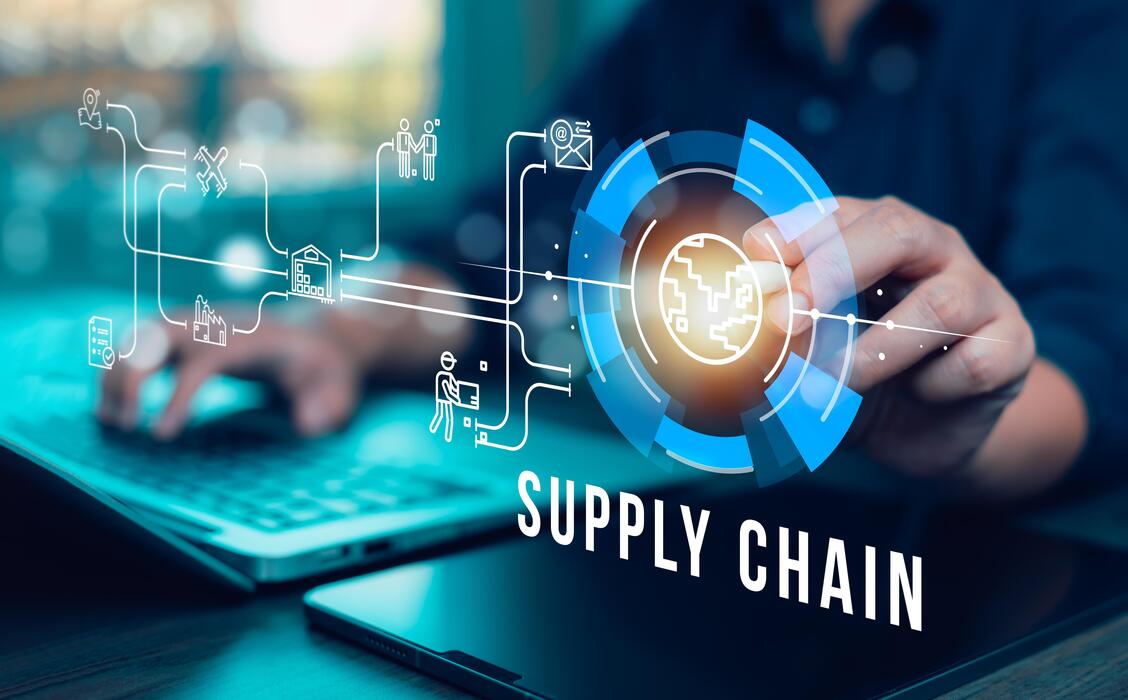
Supply chain attacks happen when cyber criminals target a trusted supplier, service, or dependency in order to gain access to other organisations. Instead of attacking each victim one by one, they exploit a weakness in a provider, product, or integration that many businesses rely on.
Supply chains are often large and complex, which can make it difficult to know where your dependencies are and whether enough security controls are in place. Vulnerabilities can be introduced, inherited, or exploited at any point in the chain.
Why supply chain risks matter
A supply chain attack can affect your business even if your own internal cyber controls are strong. If a trusted supplier is compromised, attackers may be able to access your data, disrupt your operations, abuse integrations, or use the supplier relationship as a route into your systems.
Supply chain risk matters because businesses often depend on third parties for:
- Cloud services and software platforms
- Managed IT, hosting, or support services
- Website, e-commerce, and payment systems
- Third-party data storage and processing
- Contractors, partners, and outsourced business functions
The more connected your suppliers are to your data, systems, and processes, the greater the potential impact if one of them is breached.
Common types of supply chain attack
Supply chain attacks can happen in several ways. Common examples include:
- Compromised software or updates – attackers tamper with software, code, or updates from a trusted provider so malicious content is delivered through a legitimate product.
- Attacks on third-party service providers – a supplier such as a cloud provider, website builder, MSP, or IT support company is breached, and the attacker uses that access to affect customer organisations.
- Compromised supplier accounts or credentials – attackers steal login details from a supplier or contractor and use them to access connected systems or trusted business relationships.
- Malicious or over-permissioned integrations – a connected application, plug-in, browser extension, or automated workflow has excessive access and can be abused if compromised.
- Open-source or component risk – vulnerabilities in software libraries or third-party components are exploited and inherited by the businesses that use them.
- Supplier phishing or social engineering – attackers compromise a supplier through phishing or credential theft and then use that position of trust to target customers or downstream partners.
How supply chain attacks can affect your business
The impact of a supply chain attack can go well beyond a single technical issue. A compromise affecting a trusted supplier can create operational, financial, legal, and reputational problems for your business.
Possible impacts include:
- Business disruption – systems or services may become unavailable if a supplier outage, ransomware incident, or service compromise affects your operations.
- Data exposure – customer, employee, financial, or commercially sensitive information may be accessed or leaked through a third party.
- Fraud and unauthorised activity – attackers may misuse trusted accounts, payments, or integrations to impersonate staff, redirect funds, or alter business processes.
- Reputational damage – customers and partners may lose confidence if your business is affected through a supplier relationship.
- Regulatory and contractual consequences – breaches involving personal data, service failures, or unmet contractual obligations may create legal or compliance issues.
- Cascading impact – because many businesses rely on the same suppliers and integrations, one compromise can spread disruption across multiple organisations at once.
How you can protect your business
You may not be able to control the security of every supplier, but you can take practical steps to reduce your exposure and improve resilience.
Understand your supply chain
You cannot manage supply chain risk properly unless you understand who your suppliers are and what they have access to.
- Keep a list of suppliers, service providers, platforms, and third parties your business relies on.
- Identify which suppliers are most important or highest risk, especially those with access to sensitive data, core systems, or administrative privileges.
- Map key dependencies such as cloud platforms, SaaS tools, integrations, outsourced IT, and subcontractors where possible.
- Understand shared responsibilities so you know what security your supplier provides and what remains your responsibility.
Assess suppliers before and during engagement
Supplier security should be considered before you contract a service and reviewed throughout the relationship. Ask suppliers about their cyber security controls, incident handling, and access management.
- Check whether suppliers meet recognised baselines such as Cyber Essentials where appropriate.
- Review contracts and service agreements for security expectations, breach notification, access control, and responsibilities during incidents.
- Reassess high-risk suppliers periodically rather than treating assurance as a one-off exercise.
Control access and integrations
Reducing unnecessary access can significantly limit the damage a supplier compromise can cause.
- Apply least privilege so suppliers and third parties only have the access they genuinely need.
- Review supplier, contractor and third-party accounts regularly.
- Remove or reduce access promptly when it is no longer required.
- Monitor connected apps, plug-ins, APIs and automated workflows so you understand what they can access and whether they are still needed.
Maintain good cyber hygiene
The simplest (and zero-cost) solutions go a long way to mitigate and even eliminate many threats.
- Patch software, systems, and dependencies promptly.
- Use strong authentication and multi-factor authentication (MFA) for important accounts and admin access.
- Keep devices and business systems updated and protected.
- Educate staff about phishing, credential theft, and suspicious supplier-related communications.
Monitor and prepare for incidents
Because supply chain attacks can be difficult to predict, businesses should be ready to detect issues early and respond quickly.
- Monitor for unusual account activity, unfamiliar integrations, or unexplained changes in supplier-connected systems.
- Make sure you know how suppliers will notify you if they suffer a security incident.
- Have an incident response plan that covers third-party and supplier-related incidents.
- Keep backup and recovery arrangements in place so you can continue operating if a supplier service is disrupted.
If you think your business has been affected
If you believe a supplier compromise may have affected your business, act quickly to reduce further harm. The earlier you respond, the more chance you have of containing the issue.
You should:
- Contact the supplier or service provider and look for official updates about the incident.
- Review affected accounts, integrations, and access permissions.
- Change passwords and enable multi-factor authentication (MFA) or passkeys where it is not already in place.
- Sign out of active sessions or revoke access tokens on affected accounts where possible.
- Monitor your systems and accounts for suspicious activity.
- Report to the Cyber Security Centre (CSC) and the Police using our Cyber Concerns Online Reporting Form or by calling 686060